
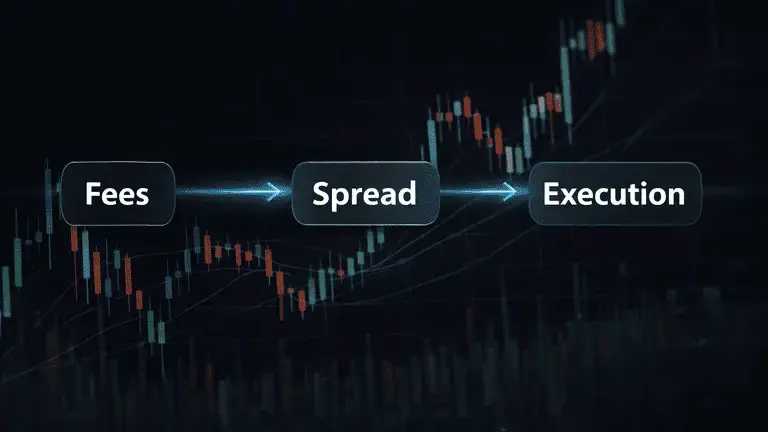
Scalping on the 1-minute chart is unforgiving.
If your fees are slightly too high, the spreads are a little wider than they look, or your orders execute just a fraction of a second slower than expected, your results suffer. You might win on the chart — but your account doesn’t grow. Over time, those tiny inefficiencies quietly destroy performance.
If you’re still new to scalping and want a simple walkthrough of how it actually works before comparing exchanges, scalp trading for beginners.
This is why most “best crypto exchange” lists are basically useless for scalpers.
When traders search for the best crypto exchange for scalping, they usually expect a simple ranking.
But scalping doesn’t work like that.
There isn’t one “best” platform — there are only exchanges that fit your execution style.
For example:
A low-fee exchange might still cost you more if spreads are wider.
A fast platform might still hurt performance if slippage increases during volatility.
Even more important:
Scalping on decentralized exchanges (DEXs) is usually not practical for 1-minute strategies.
Execution delays, gas fees, and liquidity fragmentation make fast entries and exits unreliable compared to centralized exchanges.
That’s why instead of chasing a single “best” exchange, serious scalpers focus on one thing:
Which platform lets them execute consistently without hidden costs compounding over time.
They focus on bonuses, features, and marketing promises — while ignoring what matters when you’re entering and exiting dozens of trades per session.
This guide is written from a scalper’s point of view.
Instead of asking:
Which exchange has the most features?
we’re asking a much more practical question:
Which exchanges let you
Scalp efficiently
— without letting costs slowly eat your edge?
In this pillar, we’ll break down exchanges that consistently perform better for short-term and 1-minute strategies. We’ll look at the factors real traders care about: fee structure, spread behavior, execution quality, funding costs, and reliability during volatile conditions. And we’ll be honest about drawbacks, because there is no perfect platform.
Important note:
This article isn’t financial advice. Exchanges are tools — not magic shortcuts. Good tools reduce friction, but they don’t replace discipline, psychology, or risk control.
By the end, you’ll have a clear framework for choosing the right exchange based on how you trade — not based on ads, bonuses, or hype. You’ll understand why one platform may feel cheaper, faster, or safer than another when you’re scalping.
Let’s start with the foundation:
What should a scalper actually look for when evaluating an exchange?
What Scalpers Really Need From an Exchange
Most traders choose an exchange based on apps, bonuses, or popularity.
Scalpers can’t afford that.
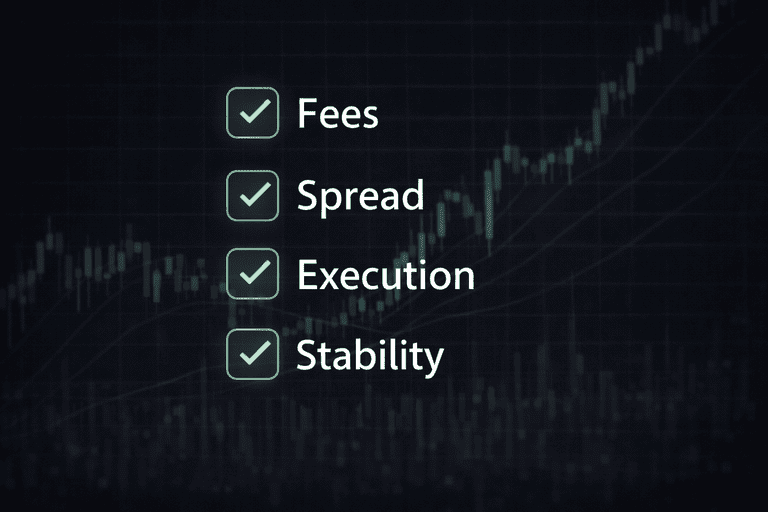
When you’re trading the 1-minute chart, tiny details matter more than features. Before thinking about indicators, bots, or UI themes, there are a handful of core variables that decide whether scalping is even worth doing on a platform.
Let’s walk through them clearly.
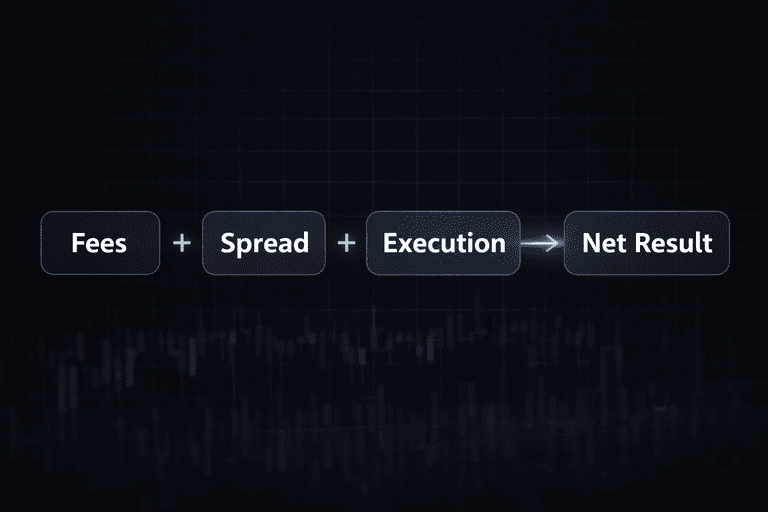
1. Trading Fees (Maker vs Taker)
Every time you open and close a position, you pay.
Two types of fees matter most:
-
Maker fees — when you place limit orders that add liquidity
-
Taker fees — when you use market orders and take liquidity
Scalpers often trigger taker fees more frequently, especially when exiting fast moves. That means tiny fee differences can compound aggressively.
A platform with “only” 0.10% compared to 0.04% might not sound like much — until you multiply it across 50–100 trades.
Rule of thumb:
-
scalpers should prefer lower taker fees
-
and avoid exchanges where fees increase based on leverage tricks or hidden add-ons
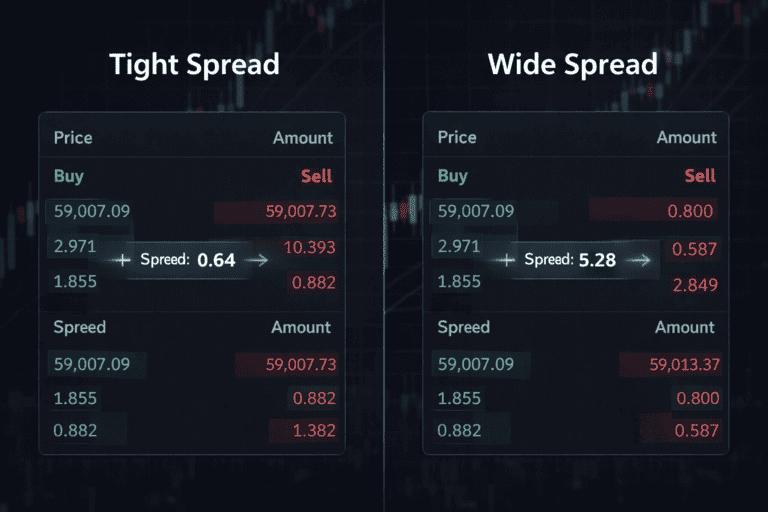
2. Spread (The Invisible Cost)
Spread is the difference between the buy and sell price.
If the spread is wide, you start every trade already negative. On low-liquidity pairs, this can be brutal — even if the fee looks cheap.
For scalpers, spread matters more than most people realize, because your profit targets are small.
Ideal environment:
-
tight spreads
-
deep liquidity
-
stable order book during volatility
If you constantly feel like price has to “move too far” just to break even, the spread is likely the problem — not your strategy.
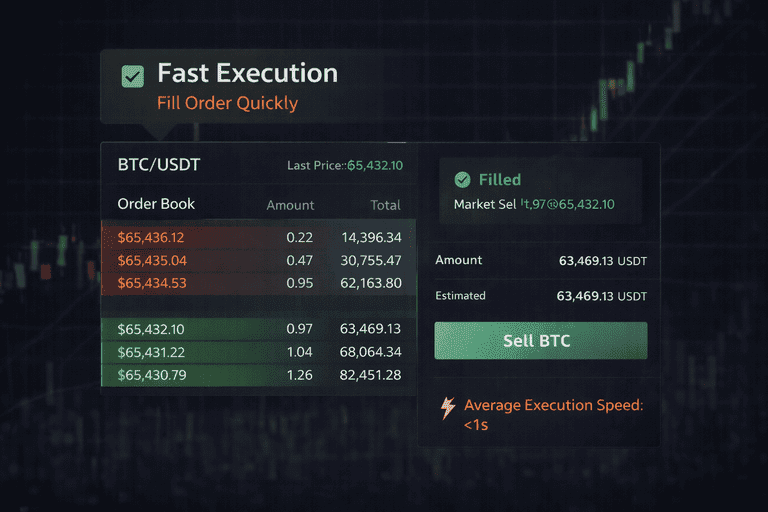
3. Order Execution Speed
Execution speed is how fast the exchange:
-
accepts your order
-
fills your order
-
confirms your position
On some platforms, orders feel slightly delayed — especially during news or high-volume periods. That tiny lag turns into slippage, worse entries, and frustrating exits.
Good scalping exchanges:
-
handle volatility without freezing
-
rarely show “system busy”
-
don’t constantly requote or partially fill
If your trades often fill worse than expected, that’s not your strategy. That’s execution.
4. Slippage and Liquidity Behavior
Slippage happens when your trade fills at a different price than you clicked.
This usually occurs because:
-
liquidity is thin
-
order book moves faster than the platform
-
large market orders jump over available liquidity
A good scalping exchange doesn’t eliminate slippage — but it minimizes it.
Tip:
If you notice heavy slippage even on Bitcoin and ETH during normal hours, that’s a red flag.
5. Funding Fees and Perpetuals
If you scalp perpetual futures, funding fees matter.
They’re small but recurring, and if you hold positions for long periods, they eat into results — especially during trending markets where one side pays more.
For scalpers who open and close quickly, funding is usually less critical — but it’s still worth monitoring.
6. Stability and Trust
None of this matters if the platform:
-
freezes
-
blocks withdrawals
-
suddenly changes rules
-
or has a history of problems
Scalpers keep funds moving, so stability matters.
Look for:
-
consistent uptime
-
transparency
-
reasonable support
-
realistic policies (not gimmicks)
The Bottom Line
A good scalping exchange doesn’t make you profitable — it simply stops working against you.
If fees are fair, spreads are tight, execution is fast, and liquidity holds up, your strategy gets a real chance to perform.
Next, we’ll compare the exchanges that usually deliver those conditions — based on real scalping priorities rather than marketing claims.
Ready for scalping on 5 min timeframe?
The Exchanges That Usually Work Best for Scalpers
Now that we know what actually matters, we can compare exchanges with a realistic lens.
There are hundreds of platforms in crypto, but most of them fail one or more critical tests for scalping:
-
spreads get wide during volatility
-
fees quietly increase depending on conditions
-
execution slows down when volume spikes
-
stability becomes questionable when markets move fast
So instead of listing every exchange possible, this guide focuses on platforms that consistently perform better for fast, short-term strategies.
The goal here isn’t to crown a universal “winner.”
Different traders need different environments. A scalper using small position sizes doesn’t have the same priorities as someone trading larger sizes with automation.
What matters is choosing a platform that aligns with how you trade.
Quick Comparison Snapshot
Before diving into full reviews, here’s a simple way to think about the landscape.
(We’ll explain each one in depth right after.)
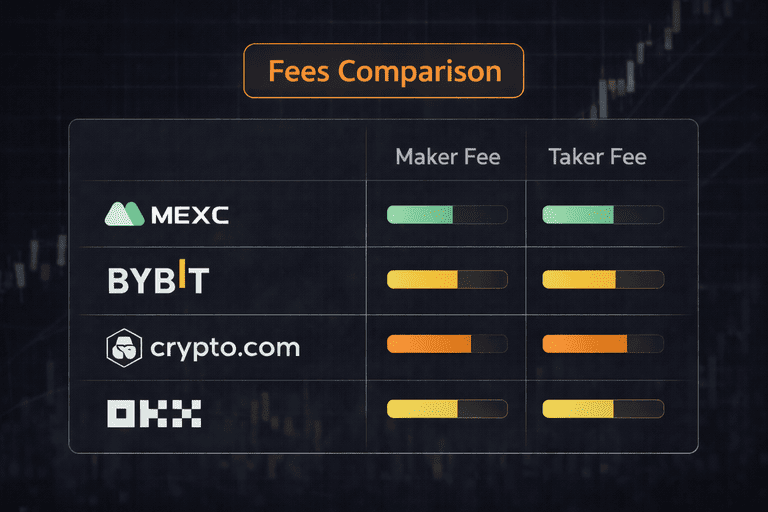
- MEXC— typically strong on lower fees and active traders
- KuCoin— wide selection of pairs and decent liquidity
- Pionex— automation options for structured scalpers
- Bybit — solid execution and derivatives tools
- OKX — professional feel, deep liquidity, solid balance
Notice something important:
Each one has a role — not all of them try to be everything. If you want to see the kind of tools scalpers actually use day to day, check out the trading tools page here
Why We Don’t Just Rank Them From #1 to #5
Most comparison articles simply stack exchanges from “best to worst”.
That sounds simple — but it’s misleading.
For example:
-
The exchange with the lowest fees might still have weak execution.
-
The exchange with the tightest spreads might have slower support or stricter limits.
-
The exchange that feels smooth today might struggle during big news events.
So instead of ranking, we’ll evaluate each exchange through the same lens:
-
What makes it useful for scalpers
-
Where it falls short
-
Who it’s best suited for
-
What type of trading environment it provides
This helps you filter intelligently rather than chasing the latest promotion.
How to Use This Guide
As you read the breakdowns, ask yourself:
-
Do I scalp frequently or occasionally?
-
Do I rely more on speed, or more on low fees?
-
Do I trade major pairs or smaller altcoins?
-
Do I need automation, or pure manual control?
The best exchange is the one that reduces friction for your specific workflow.
By the end, you should have a short shortlist — not confusion.
Next, let’s look closely at each exchange one by one, starting with platforms that usually stand out for scalpers because of their fee structure and execution quality.
MEXC — Built for Active, Fee-Sensitive Traders
MEXC tends to stand out immediately for scalpers because of its fee structure. For active traders who open and close many positions, even small reductions in fees compound into meaningful savings over time.
Typical advantages include:
-
relatively low maker and taker fees
-
frequent fee discounts and trading programs
-
decent liquidity on popular pairs
-
smooth order execution during normal conditions
For scalpers who rely on fast rotations and frequent exits, this lower friction makes a difference.
However, MEXC is not perfect. Some traders find the interface slightly busy at first, and certain low-cap pairs can still widen during volatile periods — something to always keep in mind.
Best suited for:
Traders who value lower costs and trade frequently, especially on popular markets.
KuCoin — Wide Market Selection With Solid Balance
KuCoin is popular because it offers access to a huge list of altcoins while still maintaining reasonable liquidity on major pairs. For scalpers who like experimenting with different markets, this flexibility can be attractive.
Strengths:
-
wide selection of trading pairs
-
competitive fee tiers
-
decent liquidity across major markets
-
advanced order types for more control
Where KuCoin can be less ideal is during heavy volatility on small altcoins. Spreads widen quickly, slippage increases, and scalpers may find entries filling worse than expected.
That doesn’t make it bad — it just means scalpers should stay focused on more liquid markets when trading there.
Best suited for:
Scalpers who want variety and flexibility without jumping between multiple exchanges.

Bybit — Strong Execution and Derivatives Focus
Bybit has built a reputation primarily around derivatives trading, and for many scalpers that means fast execution and responsive order matching.
Key advantages:
-
smooth execution under normal conditions
-
popular futures markets
-
intuitive interface for active trading
-
clear contract tools and risk controls
For short-term traders, that feeling of “click → filled” can be important psychologically and practically.
However, derivatives require discipline. Funding costs, leverage temptation, and emotional pressure can escalate quickly if traders are not structured.
So while Bybit can feel technically strong, it’s especially important to maintain risk control and avoid oversized positions.
Best suited for:
Scalpers who like structured futures trading and value responsiveness.
OKX — Deep Liquidity With a Professional Feel
OKX often appeals to traders who want structure and stability.
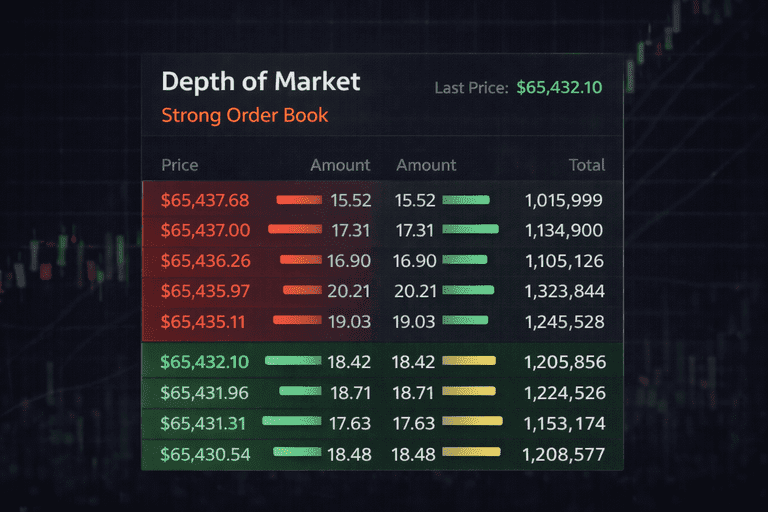
Its order book depth on major pairs is usually strong, which helps reduce slippage during normal trading conditions.
What stands out:
-
deep liquidity on popular pairs
-
balanced fee structure
-
responsive interface
-
strong futures offering without feeling cluttered
For scalpers, that combination of liquidity + clean execution can reduce frustration, especially when taking frequent entries in trending markets.
But, like every exchange, it has trade-offs. Beginners may find the platform slightly overwhelming at first, and certain features take time to learn properly.
Best suited for:
Scalpers who want a “professional” environment with solid depth and are comfortable learning tools gradually.
Pionex — Automation Options for Structured Scalpers
Pionex is different from the others because it leans heavily toward built-in automation tools.
For scalpers who like rules and structure, this can actually help prevent impulsive decisions.
Highlights:
-
built-in trading bots and automation tools
-
straightforward interface
-
risk controls tied to structured strategies
-
useful for repetitive patterns and ranges
However, automation doesn’t fix bad plans. If settings are wrong, trades still fail — only faster.
And Pionex may not always match the raw liquidity and speed of larger exchanges during big moves.
Best suited for:
Scalpers who prefer predefined systems, grids, and structured execution rather than manual clicking.
So… Which Exchange Should You Use?
There isn’t a universal “best” platform.
Instead, the right choice depends on your style.
Think in terms of priorities:
-
If fees are your biggest pain → platforms known for lower taker fees may help.
-
If you value liquidity → choose exchanges with deep order books on majors.
-
If you like automation → consider tools that support structured execution.
-
If you mainly trade futures → prioritize stable, responsive execution.
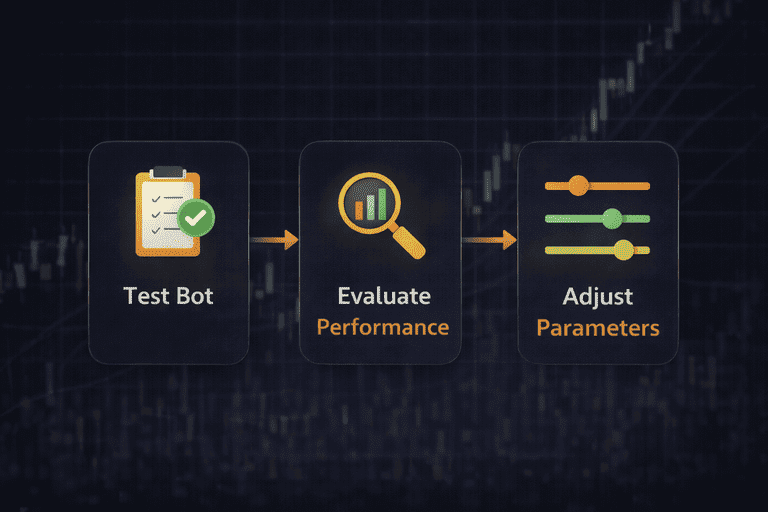
A simple approach:
Start with one or two exchanges.
Test with small size first.
Track:
-
fees paid
-
average spread
-
execution consistency
-
slippage behavior
Then adjust — not emotionally, but based on data.
A Quick Word on Safety and Discipline
Exchanges are tools — nothing more.
They can:
-
lower friction
-
keep costs reasonable
-
reduce execution stress
But they cannot:
-
replace risk management
-
stop emotional decisions
-
protect you from over-trading
Always withdraw regularly, avoid over-leveraging, and treat trading like a structured process — not entertainment.
Final Thoughts
Choosing the right exchange doesn’t magically make you profitable — but choosing the wrong one can quietly make everything harder.
If fees are fair, spreads are tight, execution is stable, and the platform fits the way you trade, your strategy finally has room to breathe.
From here, the next step is simple:
-
pick one
-
test small
-
observe
-
improve your workflow gradually
Your edge comes from structure — the exchange just helps support it.
5 thoughts on “Best Crypto Exchanges for Scalping (Fees, Spreads & Execution Compared)”