

Sometimes it feels like every candle is an opportunity — and if you could just catch more of those tiny price moves, you’d build profit faster.
That idea is what leads many traders into crypto scalping.
Scalping is a trading style focused on:
-
small price moves
-
very frequent trades
-
tight risk management
-
quick exits (win or lose)
Done right, scalping can look exciting, technical, even surgical.
Done wrong, it can quietly drain your account — trade by trade — without you realizing where the money went.
This guide is built to give you a clear, realistic picture:
-
what scalping actually is
-
how it works in crypto
-
who it suits (and who it doesn’t)
-
the tools scalpers use
-
the real risks nobody explains
-
the math behind why some people win — and most don’t
And we’ll do it step-by-step, without hype, shortcuts, or “magic indicator” nonsense.
Before diving in, you might want to warm up with our 5 min scalping strategy first.
Most traders searching for a “profitable 5 minute scalping strategy” are looking for something simple:
a clean setup
quick entries
fast profits
And yes — a 5 minute crypto scalping strategy can work.
But here’s the part most guides don’t explain:
Even the best 5 min scalping strategy can fail if you ignore execution costs.
Fees.
Spreads.
Slippage.
On small timeframes, these matter more than the strategy itself.
That’s why some traders see consistent results on the 5-minute chart…
while others using the exact same setup slowly lose money.
If you’re trading 1-minute or 5-minute scalping strategies, this is something you must understand.
👉 See how to actually build a profitable scalping setup (including real cost examples) in our full 1-minute scalping strategy guide.
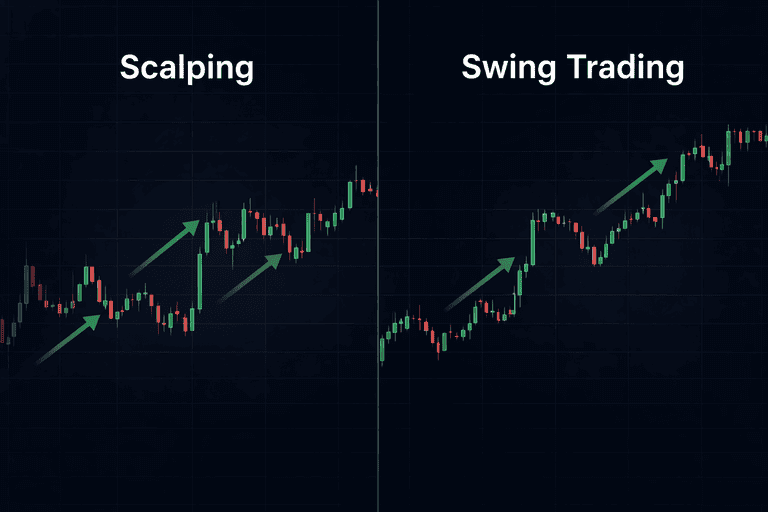
What Is Crypto Scalping, Really?
Crypto scalping is a trading strategy where you:
– open and close trades quickly
– target very small profits per trade
– rely on repetition instead of big wins
Instead of holding trades for hours or days, scalpers may hold positions for:
-
30 seconds
-
1–3 minutes
-
sometimes 5–15 minutes
A scalper doesn’t wait for big swings.
They look for micro-moves.
Typical scalper mindset
A scalper thinks more like:
“I want +0.2% ten times…”
instead of:
“I want +20% once.”
The logic is simple:
Small wins + consistency = compounded results.
But here’s the truth most educators skip:
small wins are very easy to wipe out with one mistake.
And even more important:
fees, spreads, funding, and slippage eat deeply into tiny gains.
We’ll break that down later — because it’s one of the biggest reasons beginners struggle.
If you want to see how all of this works together in a real trading framework, I strongly recommend reading our 1 min scalping strategy guide. It walks through entries, exits, risk control, and the exact logic behind every decision — step by step.
Why Crypto Scalping Became Popular
Scalping exploded in crypto because:
1. markets are open 24/7
2. volatility is higher than stocks or forex
3. exchanges offer leverage
4. social media glorifies “fast” trading
And honestly?
The idea is attractive:
-
no waiting days for results
-
“action” every minute
-
constant feeling of control
But the reasons it’s popular are also the reasons it’s dangerous.
Crypto moves fast — and mistakes happen faster.
How Crypto Scalping Actually Works (Step-by-Step)
Let’s walk through a basic scalping cycle.
Step 1 — Identify market context
Before any trade, scalpers check:
-
is price trending?
-
ranging?
-
chopping sideways?
-
news incoming?
-
liquidity high or low?
Good scalpers skip bad environments entirely.
Bad scalpers force trades anyway.
Step 2 — Choose a pair
Scalpers usually prefer:
-
BTC/USDT
-
ETH/USDT
-
high-liquidity large caps
Because spreads are tighter and execution is cleaner.
Low-volume altcoins look tempting — but slippage is brutal.
Step 3 — Use indicators or price action
Typical tools include:
-
Moving averages
-
RSI
-
VWAP
-
Support & resistance
-
EMAs crosses
-
Volume spikes
-
Order book heatmaps (more advanced)
Nothing magical.
Just decision frameworks.
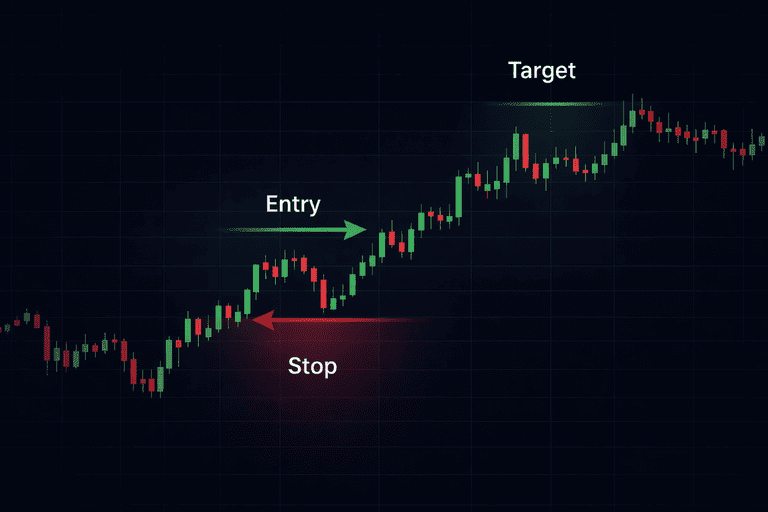
Step 4 — Plan entry + exit before clicking
Good scalpers decide:
– Entry
– Stop-loss
– Take-profit
– Risk per trade
before entering.
Beginners decide after entering — and that’s how accounts blow up.
Step 5 — Execute fast and close fast
Scalpers don’t leave positions running:
-
See profit → secure it
-
See invalidation → close it
No “hoping.”
No “maybe it turns.”
No “just a little more.”
Timeframes Scalpers Use
Most scalpers use:
-
1-minute chart
-
3-minute chart
-
sometimes 5-minute chart
They analyze larger timeframe direction, but enter using smaller charts for precision.
The smaller the timeframe:
– more trades
– more noise
– more emotional pressure
Tools Scalpers Commonly Use
Scalping without tools is like racing without dashboard instruments.
Typical setup:
-
TradingView (charting)
-
Exchange with fast execution
-
Alerts
-
Risk calculator
-
Journals / spreadsheets
-
Sometimes bots
You don’t need expensive software.
You need structure.
The Harsh Truth: Why Most People Lose at Scalping
Let’s talk honestly.
Most new scalpers lose. Not because they are stupid — but because they underestimate friction.
Scalping looks easy in screenshots.
In reality, it’s a battlefield of:
-
stress
-
impatience
-
FOMO
-
revenge trading
-
over-trading
-
ignoring stops
-
increasing leverage after losses
But the biggest killer?
Costs.
Not dramatic mistakes.
Not crashes.
Not liquidation.
Just… costs.
The Real Costs That Kill Scalpers
Every trade includes invisible expenses:
1. Trading fees
Maker / taker fees add up quickly.
Make 50 trades in a session?
You’re paying fees 50 times.
2. Spreads
The difference between buy and sell instantly reduces profit.
The smaller your target…
…the more spread matters.
3. Slippage
Fast markets = worse prices than expected.
That means:
You plan +0.3% profit
You get +0.1%
Then subtract fees…
Suddenly break-even.
4. Funding rates (on futures)
If holding longer than expected, funding payments can quietly drain balance.
5. Emotional mistakes
Costs aren’t just financial.
-
hesitation
-
closing too early
-
holding too long
-
revenge trades
-
adding size after loss
All compound damage.

Most beginners think the exchange doesn’t matter, but it absolutely does. Two traders using the exact same strategy can get completely different results just because one is paying more in fees. If you’re serious about scalping, take a look at our guide to the best crypto exchange with the lowest fees — it shows real examples and explains which fees hurt scalpers the most.
Risk Management — The Backbone of Scalping
Scalping without risk control is gambling.
Golden rules professionals follow:
Rule #1: Risk small per trade
Most experienced traders risk:
0.25% – 1% per trade
Not 10%.
Not 50%.
Rule #2: Stop-loss always exists
Stops protect from disaster.
Scalpers accept being wrong — fast.
Rule #3: Avoid trading during chaos
Major news? Huge volatile spikes?
Sit out.
Opportunities return. Accounts don’t.
Rule #4: Journal every session
Patterns repeat.
Your mistakes repeat faster.
Recording trades exposes them.
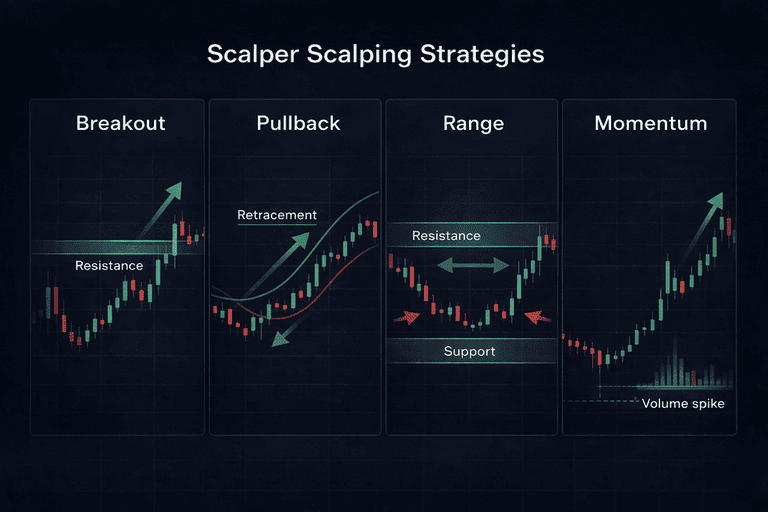
Popular Scalping Approaches (Explained Simply)
Not signals. Just strategies traders talk about.
1. EMA pullback scalping
Trade small retracements back into trend.
2. Breakout scalping
Trade tight consolidations breaking upward or downward.
3. Range scalping
Buy near support, sell near resistance.
4. Momentum pops
Catch early moves when volume explodes.
Each requires discipline and context — not blind entries.
Is Crypto Scalping Worth It?
Realistic answer:
– For disciplined, patient, emotionally stable traders — maybe.
– For impulsive, stressed, impatient traders — usually no.
Scalping demands:
-
fast decision-making
-
ability to accept many small losses
-
zero ego
-
consistency
-
comfort with boredom
Most beginners think scalping is exciting.
Professionals treat it like factory work.
Pros & Cons
Advantages
-
Many opportunities
-
No waiting weeks
-
Teaches discipline
-
Good for understanding price behavior
Disadvantages
-
mentally exhausting
-
high fee friction
-
easy to overtrade
-
requires structure
-
mistakes multiply fast
Common Mistakes Beginners Make
– Trading every tiny move
– Ignoring news
– Removing stops
– Increasing leverage after losses
– Switching strategies constantly
– Trading when tired or emotional
Fix these — performance immediately improves.
Frequently Asked Questions
Can beginners start with scalping?
They can — but it’s harder than it looks. Many traders are better starting with slightly higher timeframes first.
How much money do I need?
Technically even $50 works.
But real consistency >> account size.
Is scalping safer than other strategies?
No. Risk always exists — but disciplined risk management reduces blow-ups.
Which pairs are best?
High liquidity, low spread: usually BTC and ETH.
Do I need leverage?
No. Many scalpers don’t use it — or use very small amounts.
Before you jump in, remember something important: you don’t have to figure everything out manually. Simple tools can help with pattern recognition, session timing, risk reminders, and analysis speed. If you want to see everything in one place, explore our crypto scalping tools page — it’s a collection of helpful utilities designed specifically for 1-minute traders.
Final Thoughts: Treat Scalping Like a Skill, Not a Shortcut
Crypto scalping isn’t magic.
It’s not “fast money.”
It’s repetition, observation, risk control, emotional strength — and a constant fight against costs eating your edge.
If you decide to try it:
-
stay patient
-
risk small
-
review sessions
-
avoid ego
-
learn slowly
The traders who survive aren’t the fastest.
They’re the calmest.

9 thoughts on “Beginner’s Guide to Crypto Scalping: How It Works, Why It’s Hard — and How Traders Try to Make It Profitable”