
Most crypto trading content quietly assumes you’re starting with a big account.
More capital. More room for mistakes. More tolerance for fees, slippage, and bad execution.
But that’s not reality for most traders.
Most people start with a small account — sometimes very small — and quickly realize that what works for large accounts often doesn’t work at all when capital is limited.
This article is not about hype strategies, miracle indicators, or “turn $100 into $10,000” nonsense.
This is about crypto trading strategies that actually work for small accounts, in the real world, under real conditions, with real costs.
If you trade with limited capital, this is the mindset and framework you need.
What Counts as a “Small Account” in Crypto Trading?
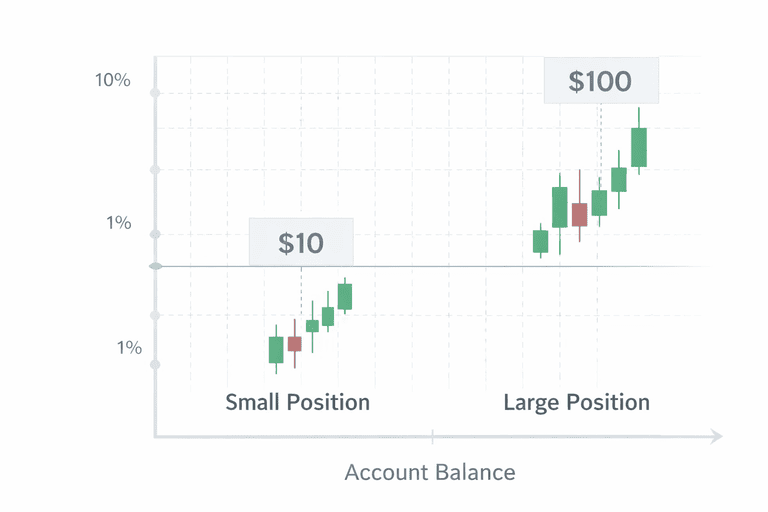
A small account isn’t a fixed number. It’s contextual.
In crypto trading, a “small account” usually means:
-
Your position size is sensitive to fees
-
A few bad trades can meaningfully damage your balance
-
Overtrading hurts more than undertrading
-
Execution quality matters more than predictions
For some traders, that’s $100.
For others, it’s $500, $1,000, or even $5,000 — especially in fast markets.
The key point is this:
If fees, spreads, or slippage noticeably affect your results, you are trading a small account.
That changes everything.
Why Most Trading Strategies Fail Small Accounts
Let’s be blunt.
Most popular trading strategies fail small accounts for structural reasons, not because the trader is “bad.”
Here’s why:
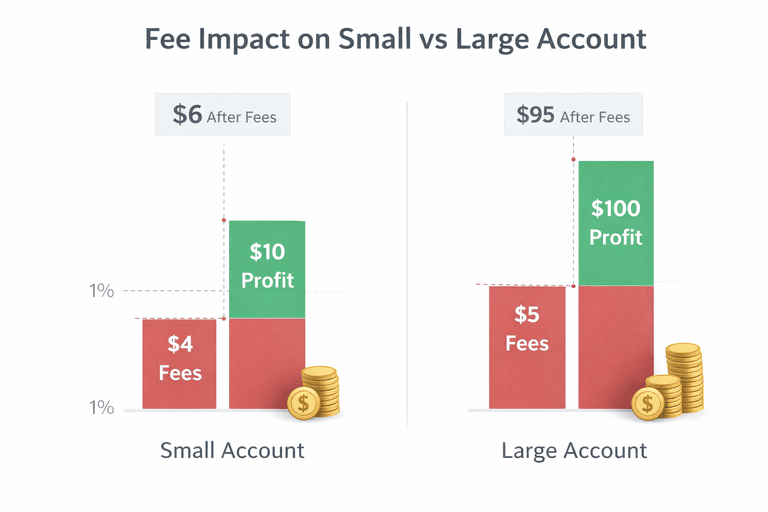
1. Fees Eat a Bigger Percentage
What looks like a tiny fee on paper becomes massive when:
-
Position size is small
-
Trade frequency is high
-
Profit targets are tight
A strategy that works for a large account can quietly bleed a small one dry.
2. Overtrading Is More Punishing
Small accounts feel psychological pressure:
-
“I need more trades”
-
“I need to grow this faster”
-
“I can’t miss moves”
This usually leads to lower-quality setups and higher costs.
3. Risk Management Errors Hurt More
A 2–3% mistake on a large account is annoying.
On a small account, it can be devastating.
Small accounts don’t forgive sloppy risk management.
The Core Rule for Small Account Trading
Before we talk strategies, you need one non-negotiable rule:
Your strategy must survive bad days before it can benefit from good ones.
This means:
-
No oversized positions
-
No revenge trading
-
No dependency on “perfect execution”
-
No strategy that requires constant activity to work
If your strategy collapses after 3–4 losing trades, it’s not suitable for a small account.
Strategy #1: Fewer Trades, Better Trades
This sounds boring — and that’s exactly why it works.
Small accounts perform better when:
-
Trade frequency is lower
-
Setup quality is higher
-
Decisions are deliberate
You don’t need constant action.
You need asymmetry — trades where risk is controlled and upside is meaningful relative to costs.
How to Apply This:
-
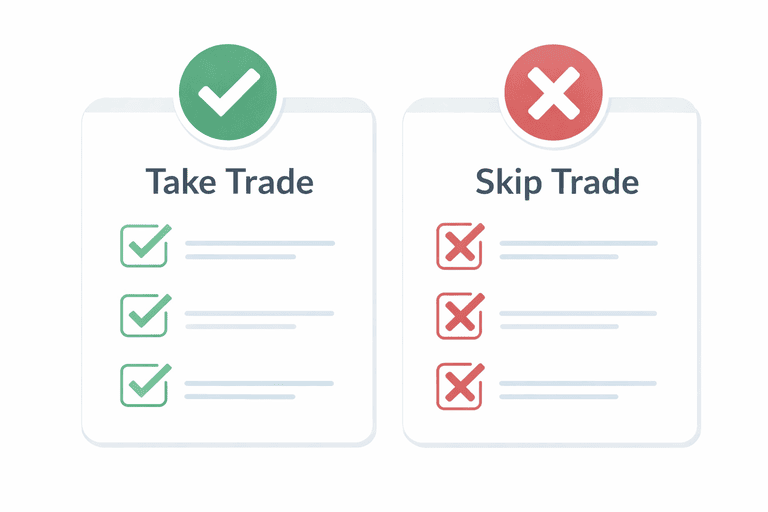
Limit yourself to 1–3 high-quality trades per session
-
Skip mediocre setups entirely
-
Track net results after fees, not raw P&L
This approach alone eliminates many small-account killers.
Strategy #2: Risk First, Strategy Second
Most traders do this backward.
They look for:
-
Indicators
-
Patterns
-
Signals
Then they think about risk.
Small accounts must flip this logic.
Start With Risk:
-
Decide maximum risk per trade
-
Decide maximum daily loss
-
Decide when you stop trading
Only then do you look for setups.
A simple rule that works:
-
Risk 0.5%–1% per trade
-
Stop for the day at 2% loss
-
No “one more trade” exceptions
This keeps your account alive — which is the first job of any strategy so make sure to read Crypto Risk Management Strategies.
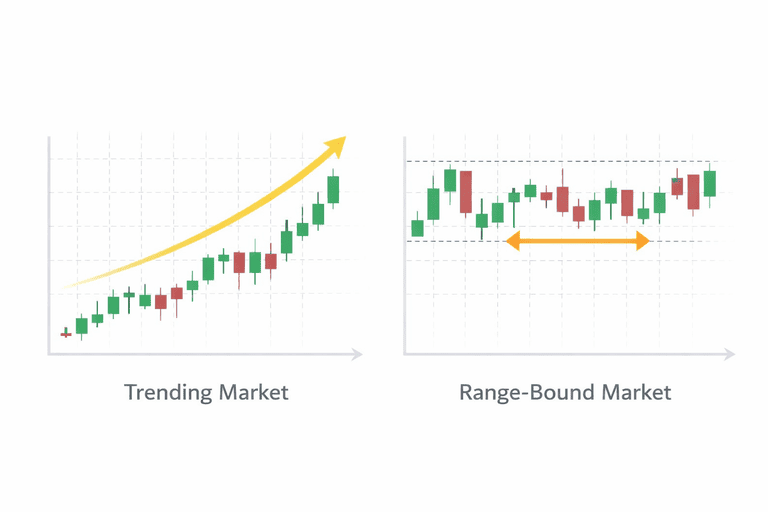
Strategy #3: Trade Market Conditions, Not Opinions
Small accounts cannot afford to fight the market.
You don’t need to predict tops or bottoms.
You need to align with what the market is already doing.
That means:
-
Trading momentum when momentum exists
-
Standing aside during chop
-
Avoiding forced trades during low volatility
Practical Example:
-
Trending market → trend continuation setups
-
Ranging market → fewer trades or none
-
High volatility → reduced size, wider stops
The market sets the rules — your job is to adapt, not argue.
Strategy #4: Execution Matters More Than Indicators
This is where many small traders get misled.
Indicators don’t cost money.
Bad execution does.
For small accounts:
-
Spread matters
-
Slippage matters
-
Order type matters
-
Platform stability matters
Two traders using the same strategy can get very different results purely because of execution quality.
Focus On:
-
Trading pairs with good liquidity
-
Avoiding illiquid hours
-
Using limit orders when possible
-
Choosing platforms optimized for active trading
(Yes, even though we’re broadening beyond scalping — execution still applies.)
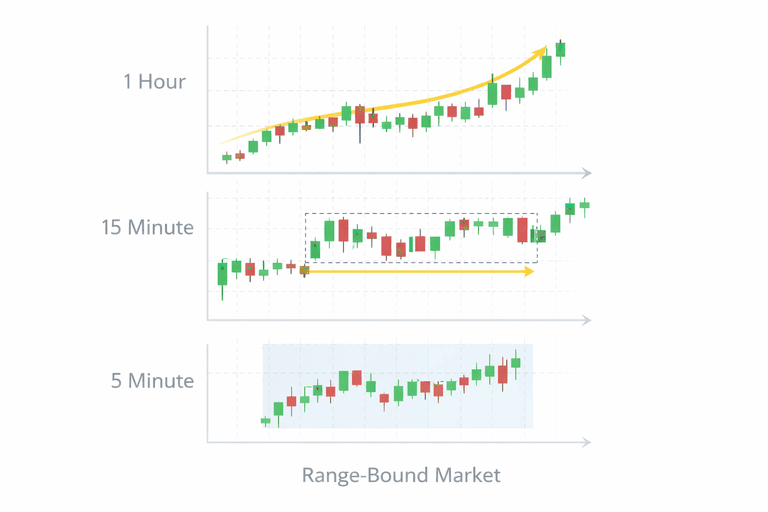
Strategy #5: Timeframes That Don’t Force Overtrading
Small accounts often get trapped in ultra-fast timeframes because they feel productive.
In reality, faster charts:
-
Increase trade frequency
-
Increase fees
-
Increase emotional errors
Better alternatives:
-
Combine higher timeframe bias with lower timeframe execution
-
Or trade fewer setups on mid-range timeframes
You don’t need to abandon fast trading — just stop letting it control you.
Strategy #6: Avoid “All-In” Mentality at All Costs
Small accounts tempt traders into extremes:
-
“I need to grow this fast”
-
“This trade must work”
-
“I’ll size up just this once”
This is how accounts die.
Instead:
-
Treat your small account as training capital
-
Focus on process consistency
-
Let growth be a side effect, not the goal
Ironically, accounts grow faster when growth is not forced.
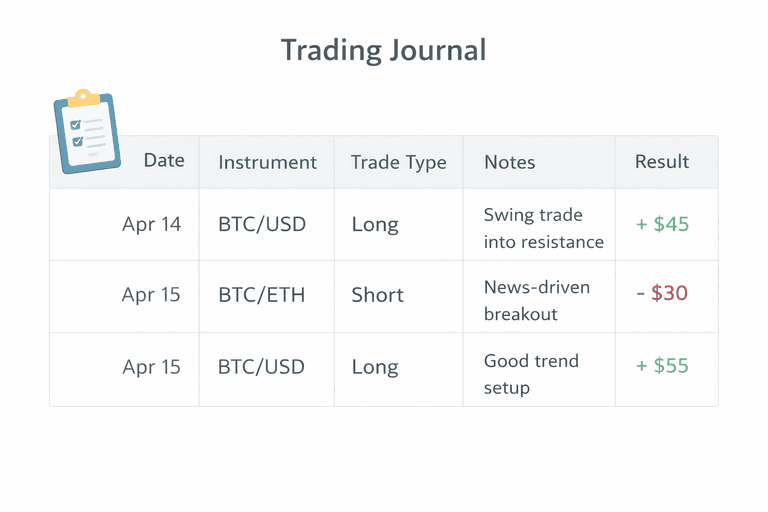
Strategy #7: Journaling That Actually Helps
Most traders journal incorrectly.
They track:
-
Entries
-
Exits
-
Profit/loss
Small-account traders should track:
-
Fees paid
-
Trade frequency
-
Emotional state
-
Rule violations
The goal isn’t pretty stats — it’s identifying what quietly drains your account.
Strategy #8: Accept That Flat Days Are Wins
This mindset shift is huge.
If you:
-
Didn’t lose money
-
Followed your rules
-
Avoided bad trades
That’s a successful day — especially for a small account.
Flat days preserve capital and mental clarity.
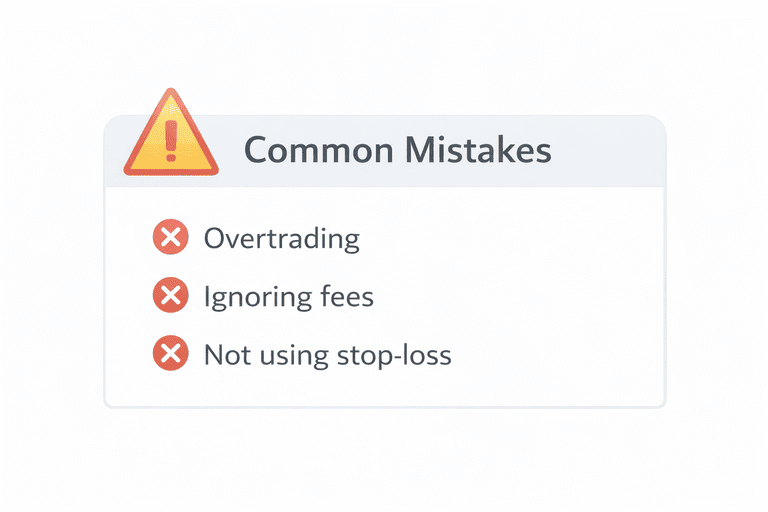
Common Mistakes Small Account Traders Must Avoid
Let’s call these out clearly:
-
Overleveraging to “speed things up”
-
Chasing every move
-
Ignoring fees
-
Trading during low-quality conditions
-
Copying strategies designed for large accounts
-
Measuring success only by daily P&L
Every one of these slowly erodes small accounts.
How Small Accounts Actually Grow (The Truth)
Small accounts don’t grow through:
-
Big wins
-
Viral strategies
-
Perfect prediction
They grow through:
-
Survival
-
Consistency
-
Controlled risk
-
Gradual compounding
Growth feels slow — until it isn’t.
The traders who make it aren’t the most aggressive.
They’re the most disciplined.
Final Thoughts: Small Accounts Need Smart Strategies, Not Loud Ones
Crypto trading with a small account is not a disadvantage — it’s a filter.
It forces you to:
-
Respect risk
-
Focus on execution
-
Eliminate nonsense
-
Build real skill
The strategies that work are rarely flashy, but they are durable.
If you can trade well with a small account, scaling up becomes a matter of capital, not ability.
That’s where real confidence comes from.
SUGGESTION: Beginner’s Guide to Crypto Trading
SUGGESTION: Trading Tools Hub / AI Dashboard
Frequently Asked Questions About Crypto Trading With Small Accounts
Can you really trade crypto with a small account?
Yes, you can trade crypto with a small account, but the approach must be realistic. Small accounts are more sensitive to fees, overtrading, and risk management mistakes. Successful small-account trading focuses on fewer trades, strict risk control, and good execution rather than frequent trading or high leverage.
What is considered a small account in crypto trading?
A small account in crypto trading is any account where fees, spreads, and slippage noticeably affect results. For many traders, this can be anywhere from $100 to a few thousand dollars. The defining factor is not the balance itself, but how limited capital influences position sizing and risk.
What is the best crypto trading strategy for small accounts?
The best crypto trading strategy for small accounts is one that prioritizes risk management, low trade frequency, and high-quality setups. Strategies that rely on discipline, controlled losses, and consistency tend to work better than aggressive or highly leveraged approaches for small balances.
Is crypto trading with a small account profitable?
Crypto trading with a small account can be profitable over time, but expectations must be realistic. Profits usually grow slowly at first. The primary goal should be preserving capital and building consistency, not trying to multiply the account quickly through risky trades.
How much should you risk per trade with a small account?
With a small account, most traders risk between 0.5% and 1% per trade. This helps prevent a short losing streak from causing significant damage. Lower risk per trade allows more room for learning, adapting, and surviving unfavorable market conditions.
Are fees more important when trading with small capital?
Yes, fees are significantly more important when trading with small capital. Even small trading fees can consume a large portion of profits if trades are frequent. Small-account traders should always evaluate strategies based on net results after fees, not just gross profit.
Should beginners start crypto trading with a small account?
Starting with a small account is often a good idea for beginners. It limits financial risk while allowing traders to learn execution, discipline, and emotional control. Many experienced traders recommend proving consistency on a small account before increasing capital.
Is leverage a good idea for small crypto trading accounts?
High leverage is generally risky for small crypto trading accounts. While leverage can increase potential gains, it also amplifies losses and increases the chance of account wipeout. Small accounts benefit more from controlled position sizing than from aggressive leverage.
How often should you trade with a small account?
Small-account traders usually perform better with fewer trades. Overtrading increases fees and emotional mistakes. Many successful traders focus on one to three high-quality trades per session rather than trying to trade every market move.
Can small accounts grow into large accounts through crypto trading?
Yes, small accounts can grow over time, but growth is usually gradual. Accounts that survive long enough to compound tend to grow through consistency and discipline, not through big single trades. Scaling works best once a trader has proven a repeatable process.
Do indicators work for small crypto trading accounts?
Indicators can be useful, but they are less important than execution and risk management for small accounts. Poor execution, wide spreads, or excessive fees can negate even good indicator signals. Small-account traders benefit more from understanding market conditions than relying on complex indicators.
Is long-term trading better than short-term trading for small accounts?
Both can work, but short-term trading requires more discipline and cost awareness. Long-term trading often reduces fees and emotional pressure. The best choice depends on the trader’s schedule, psychology, and ability to manage risk consistently.
What is the biggest mistake small account traders make?
The biggest mistake small account traders make is trying to grow the account too quickly. This often leads to overtrading, excessive risk, and emotional decisions. Preserving capital and following a structured process is more important than chasing fast growth.
1 thought on “Crypto Trading Strategies That Actually Work for Small Accounts”