
Crypto moves fast. But volatility?
But Volatility? That madafaka moves faster.
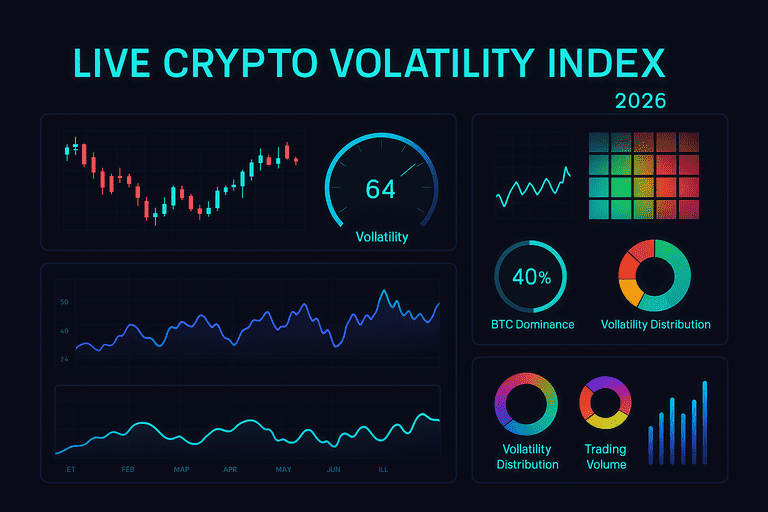
For 1-minute traders, reading volatility in real time is the difference between entering at the right moment… and getting blown out by a sudden spike. That’s why a Live Crypto Volatility Index (CVI) is becoming one of the most important analytics tools in 2026 for short-term trading strategies.
In this deep, actionable guide, you’ll learn:
-
What a live crypto volatility index actually measures
-
How professional 1-minute scalpers use volatility to time trades
-
Real-time indicators you can combine with volatility for accuracy
-
How to read volatility in Bitcoin, ETH, and altcoins
-
Why volatility patterns matter in high-frequency price moves
-
The exact tools you can use right now to track volatility live
This is not theory — this is hands-on, battle-tested knowledge for traders who want precision, risk control, and profit optimization.
All these tools are good when you user the with a strategy. choose you 1 minutes scalping or 5 minutes scalping strategy for them to get a better result.
What Is a Live Crypto Volatility Index?
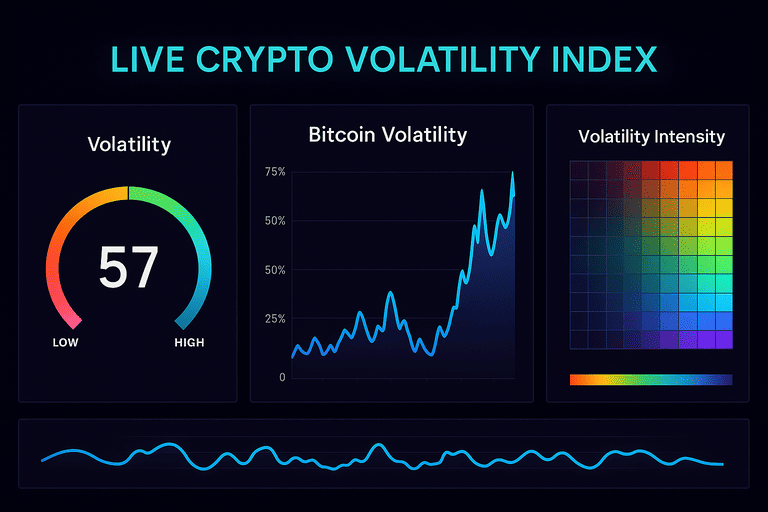
A Crypto Volatility Index (CVI) tracks how rapidly crypto prices are moving.
In simple terms:
-
High volatility → big price swings → great for scalping
-
Low volatility → slow movement → harder to find entry points
When the index spikes, the market is telling you:
“Money is moving NOW.”
When the index drops?
“Chill mode. Wait for the next surge.”
This is why scalpers love volatility dashboards — you instantly know whether the market is “tradeable” or “dead.”
Read more about london session forex scalping.
Why Volatility Matters Most for 1-Minute Scalpers
Scalping at a 1-minute resolution is not trend trading and it’s not swing trading.
You’re operating where:
-
micro-trends form
-
micro-imbalances trigger orders
-
liquidity gaps appear
-
stop-hunts occur
-
fake breakouts happen
-
trend-reversals start
The No.1 driver behind all of those?
Volatility.
If volatility is high, even tiny moves become opportunities.
If volatility is low, the chart becomes noise.
Most losing scalpers simply trade when the market is too slow.
They’re trying to catch moves… that don’t exist.
This is why your live volatility index becomes the controller of whether you trade or wait.
How a Volatility Index Is Calculated (Simple Explanation)
A crypto volatility index typically uses:
-
price oscillation
-
statistical deviation
-
candle range expansion
-
delta in liquidity
-
momentum bursts
But in practical trader language, it answers one question:
“How aggressively are buyers and sellers fighting right now?”
Volatility rises when:
-
volume increases
-
large orders enter the book
-
news hits
-
whales reposition
-
liquidations are triggered
-
funding rates shift
Volatility drops when:
-
liquidity providers dominate
-
price grinds sideways
-
no catalysts exist
-
market is recovering after a liquidation cascade
Understanding these mechanics allows you to predict conditions — not just react to them.
How to Read a Live Volatility Index for BTC, ETH, and Altcoins
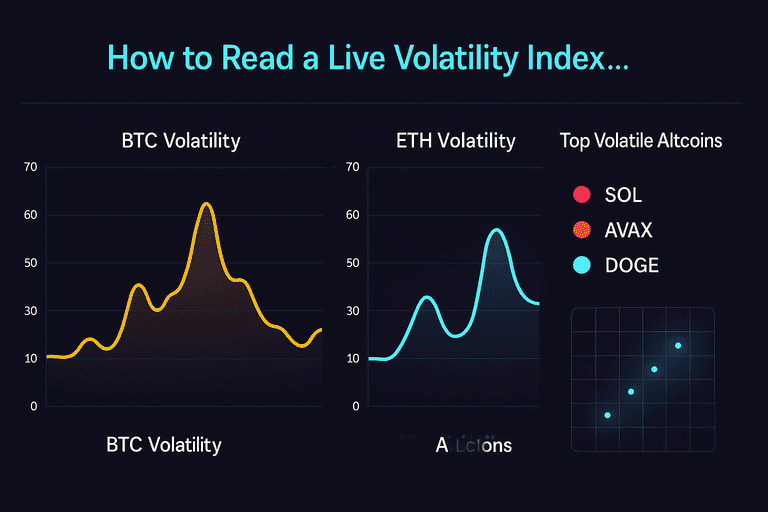
Different assets behave differently. Here’s the practical way to interpret the index:
Bitcoin (BTC)
BTC volatility changes slower but forms stronger, sustainable moves.
When the index spikes → BTC often trends for 5–20 minutes.
Perfect for:
-
EMA cross scalps
-
RSI breakout scalps
-
Doji → continuation setups
Combine this with your EMA Crossover Detector here.
Ethereum (ETH)
ETH reacts faster but corrects quicker.
Volatility spikes indicate shorter but more frequent opportunities.
Best for:
-
RSI overbought/oversold reversals
-
volume pressure scalps
Try your RSI Detector.
Altcoins (SOL, AVAX, DOGE, SHIB, etc.)
Altcoins have the wildest volatility patterns, perfect for aggressive scalpers.
When the volatility index jumps:
-
breakouts become explosive
-
fakeouts become violent
-
stops must be tighter
-
RR must be controlled
Use gainers and losers tool to detect strong vs weak coins instantly:
Volatility Trading for Scalpers: The Core Formula
If you’re scalping, here is the golden rule:
High Volatility → Trend Scalping
Use momentum-based tools:
-
EMA Cross
-
Volume Analyzer
-
Breakout candles
-
Continuation setups
Medium Volatility → Pattern Scalping
Use:
-
Doji candles
-
Hammer & Shooting Star
-
Support-resistance bounce trades
Your Doji Detector here.
Hammer/Shooting Star detector.
Low Volatility → Do NOT Scalping
Low volatility = sideways chop.
This is where most beginners lose money.
Trade only when your volatility index tells you:
“The engine is running.”
Never trade when the engine is off.
How News and Liquidations Influence the Volatility Index
Volatility spikes often come from three catalysts:
1. Liquidation Cascades
When many traders are positioned incorrectly, a chain reaction begins.
Example:
-
A big player dumps → triggers stops → triggers liquidations → triggers panic selling
Your volatility index shoots up.
Your scalping opportunity is born.
Track long vs short imbalance here.
2. Major Economic Events
Even traditional finance affects crypto volatility:
-
CPI
-
FOMC
-
Interest rate decisions
These events cause instant volatility bursts.
3. Exchange Outages or Liquidity Shifts
If Binance, Coinbase, or Bybit experience unusual volume changes, volatility increases.
This is why smart scalpers always track:
-
liquidity
-
long-short sentiment
-
volatility
All three together create a full picture of tradeability.
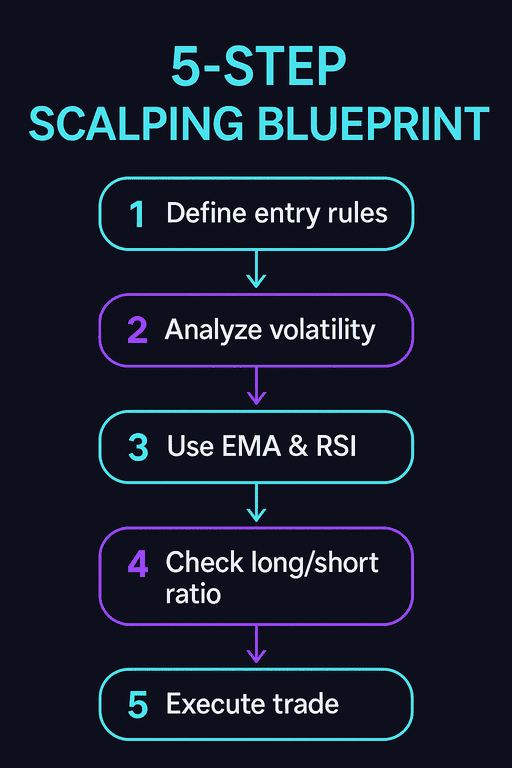
How to Build a Scalping Strategy Around Volatility (Step-by-Step)
Step 1 — Check the live volatility index
If volatility < 30%, wait.
If volatility > 40%, prepare.
If volatility > 60%, trade aggressively.
Step 2 — Confirm trend direction
Use your EMA Cross Detector.
Step 3 — Look for pressure imbalance
Check the Long vs Short Ratio:
If the market is 70% long → short setups become easier.
If 70% short → long setups become easier.
Step 4 — Identify your entry candle
Use:
-
Dojis
-
Hammers
-
Breakout candles
Step 5 — Set tight stop-losses
High volatility → quick swings
Small stop = high RR
Step 6 — Exit using microstructure
Exit when:
-
volatility drops
-
opposite trend signals appear
-
liquidity dries up
-
a reversal candle prints
Volatility Patterns Every Scalper Should Know
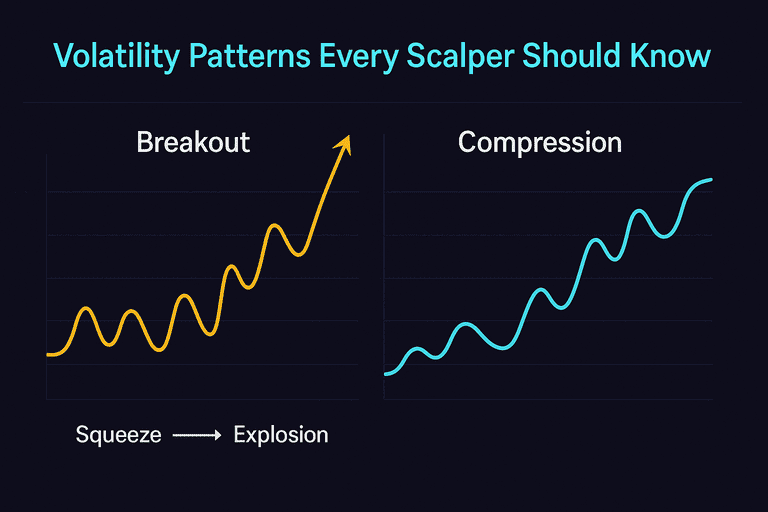
1. Volatility Expansion → Trend Phase
Market explodes quickly.
Best time for fast scalps.
2. Volatility Compression → Squeeze Phase
Market becomes tight.
A big move is coming — wait for direction.
3. Volatility Shock → Liquidation Wave
Often triggered by:
-
whale orders
-
news announcements
-
overleveraged traders
This creates the biggest opportunities.
4. Volatility Reset → Cooldown Phase
Price stabilizes.
Not ideal for scalping.
Real Examples: BTC Volatility Behavior in High-Pressure Moves
Example 1: CPI Release
BTC spikes 2–3% within minutes → volatility index explodes → scalpers catch perfect breakouts.
Example 2: Funding Rate Flip
Liquidations push BTC quickly → volatility spike → short-term trend forms.
Example 3: Altcoin News Catalyst
SOL, AVAX, or DOGE can jump 5–20% within minutes.
Volatility index predicts the move before it hits the news feed.
How to Use Volatility to Filter Bad Trades
Many scalpers lose because they enter trades at the wrong time.
Volatility is the best filter to remove 60–70% of bad trades.
Here’s what low volatility tells you:
-
don’t chase breakouts
-
don’t scalp ranges
-
don’t force trades
-
don’t trade “dead” charts
When volatility is high:
-
all patterns become more reliable
-
breakouts follow through
-
liquidity supports the move
-
risk-to-reward improves
The Ultimate Scalping Combo: 5 Tools + Volatility
To scalpers, volatility is the engine.
Tools are the steering wheel.
Here’s the perfect combo:
Live Volatility Index (the filter)
EMA Cross Detector (trend direction)
RSI Scanner (momentum confirmation)
Performance Analyzer (strongest coin finder)
Long/Short Ratio (sentiment backbone)
Your ecosystem already has these tools:
This combination is legitimately powerful.
Is a Live Volatility Index Enough to Trade Alone?
No — volatility is a context tool, not a signal tool.
It tells you:
-
when to trade
-
when NOT to trade
But it does not:
-
predict direction
-
time entries
-
manage risk
-
confirm reversals
That’s why volatility must always be combined with your other indicators.
Conclusion: Volatility Is the #1 Signal for 1-Minute Scalpers
If you’re a scalper, volatility is your foundation.
With a live crypto volatility index, you gain:
-
real-time awareness
-
better timing
-
stronger setups
-
fewer losing trades
-
more accurate entries
-
perfect trend recognition
-
higher-probability scalps
Use it as your pre-trade filter, combine it with your tools, and you’ll operate like a professional.
2 thoughts on “Live Crypto Volatility Index (2026): The Ultimate Real-Time Guide for 1-Minute Scalpers”